
Why are we here?
The real business of this trip – the Biennale – kicked off on Tuesday, with visits to multiple country pavilions. Some were more interesting (Poland, Greece, Denmark and Venice) than others (I’m looking at you, Egypt).
This raised an eyebrow. (Well, actually two, as I’ve never mastered raising just one.)
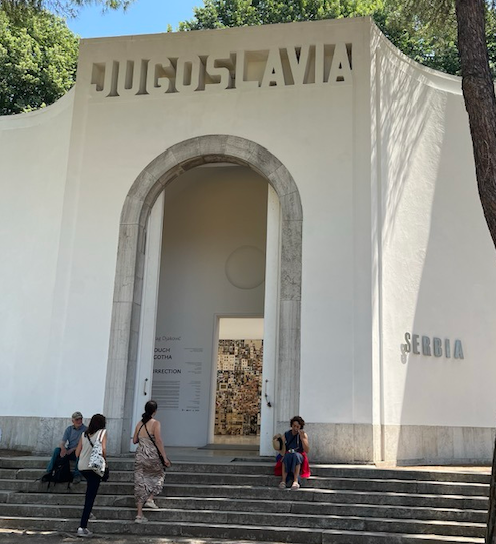
Once upon a time Yugoslavia was one of many countries that have their own, permanent buildings in the Giardini Biennale. Well, of course, Yugoslavia is no more. Does the fact that there is a sign saying Serbia on the side mean that Serbia somehow won the Biennale building in the many wars of separation or does it share the building in turn with Croatia, Bosnia and the others?
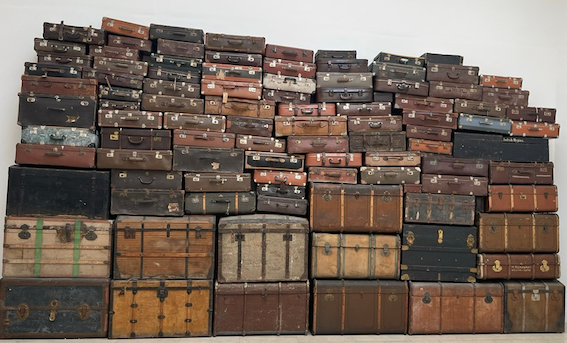
Looked it up and, yep, the building is now permanently the Serbian pavilion, a fact that somehow made this part of the display inside even more disturbing.
Little sidebar here. In case you didn’t know (and why would you), shortly before the Biennale officially opened this month, the jury members stated they would “refrain from the consideration” [for the Gold and Silver Lions] “those countries whose leaders are currently charged with crimes against humanity by the International Criminal Court.” No names, but everyone knew they were talking about Putin and Netanyahu. There was a fair bit of backlash, including the artist featured in the Israeli pavilion threatening to sue everyone and his brother for antisemitism. All five jury members resigned and this year, for the first time in its history the Lions will be awarded not based on the judgement of the curator-appointed jury, but by popular vote.
So, imagine my delight when we spotted this sign on the Russian pavilion.
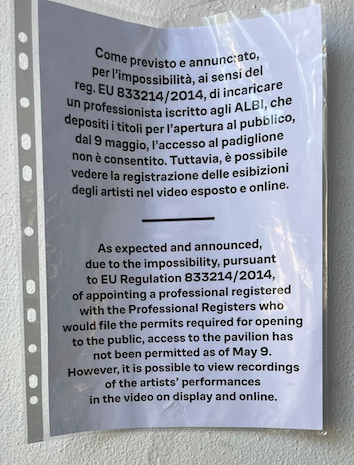
That’s right. The Russian government could not find a civil servant in Venice willing to sign a permit to allow the pavilion to be opened to the public. Would that this has also been the case for the Israeli (and US) pavilions.
Day 2 began with the French pavilion which, for reasons that did make sense, included this cartoon. (Parts 2 and 3 on YouTube.)
To my surprise (and delight) my favourite pavilion turned out to be the British one, which featured amazing paintings by Lubaina Himid.
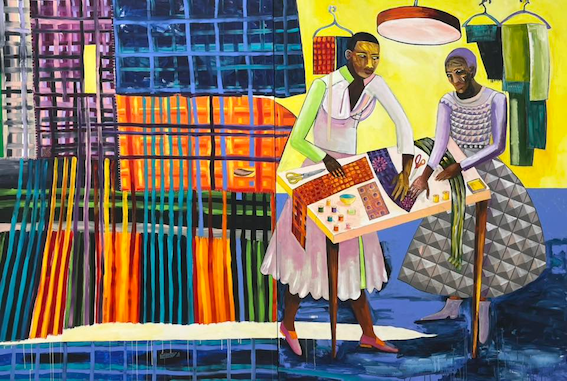
The paintings blew me away – as did the decision to select her work to represent Britain. As we were leaving I was approached by a young man from the British Council who asked me if I would be willing to fill out a questionnaire about the exhibition on his tablet. I said I most certainly, finishing with, in the anything-else-you’d-like-to-say box: “This exhibition makes me feel proud to be British for the first time since Brexit.”
Dirk was less lucky with his ancestral pavilion, the last we visited on the second day. The offering from the Netherlands is an excruciating 25-minute piece of experimental theatre. (At least we both got a quick nap.)
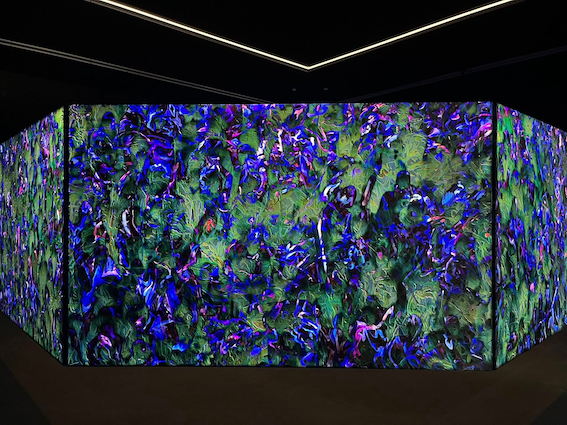
In between first and worst, there was the fantastic light installation in the Australian pavilion.
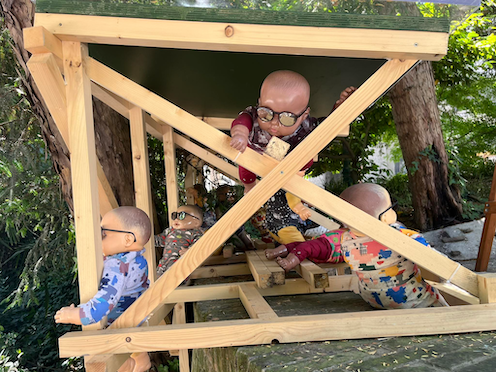
And then there were the weird Japanese baby dolls.
Day 3 was going to be ART! at the Arsenale, but we did stop into some non-Giardini country pavilions on the way.
First and definitely foremost…
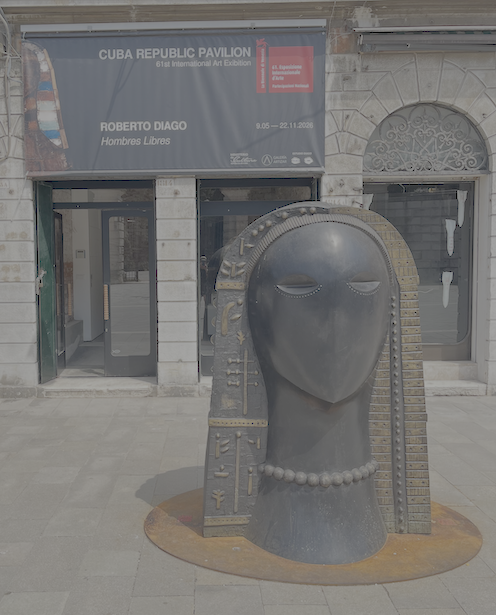
The Cuban pavilion featured a number of wonderful works by Roberto Diago. Just one example.
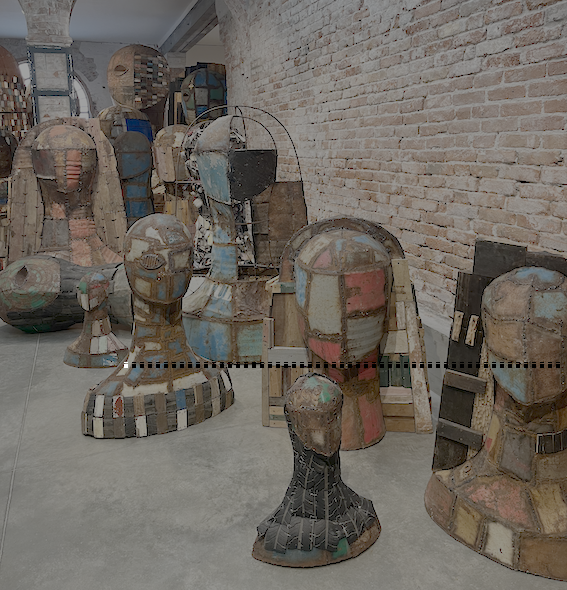
We also had a chance to talk to the women in the pavilion, who did not want to discuss politics, but did appreciate, for what little it is worth, that we are Canadians who are very angry that our country isn’t doing more for theirs at this particularly awful time.
Also on the way to Arsenale, we came across the Dominican Republic pavilion where we introduced to the works of Iván Tovar, a Dominican artist we had no idea had been very much at the heart of the European surrealist movement.
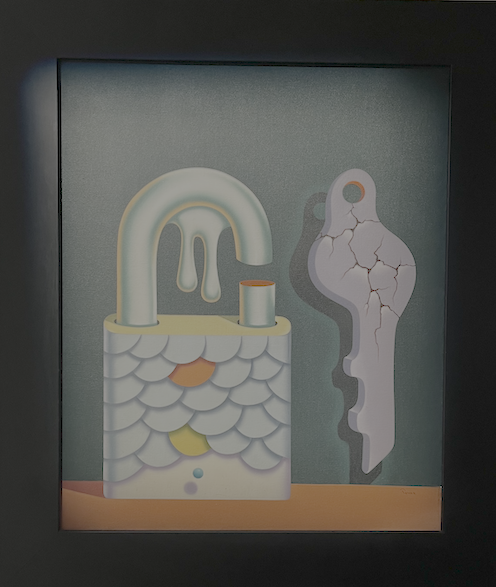
Who knew? Not us.
Okay, we’re at the Arsenale. Time to take a deep breath and dive right in.
Imagine a connected series of fucking huge warehouses filled from floor to ceiling with ART! ART! ART! I lasted about 10 minutes before my head nearly exploded. Dirk did a very good job of creating a video which illustrated the sensory overload, but I’d have to upgrade to include it here. (You used to be able to sneak around this by loading to your media library, but they’ve figured this out. Argh.)
Went to lunch (incredibly bland Caesar salad in restaurant, then ventured back in, focusing on more country pavilions.
Exited, made our way past an installation to sit on a bench. Looked back over my shoulder at installation.
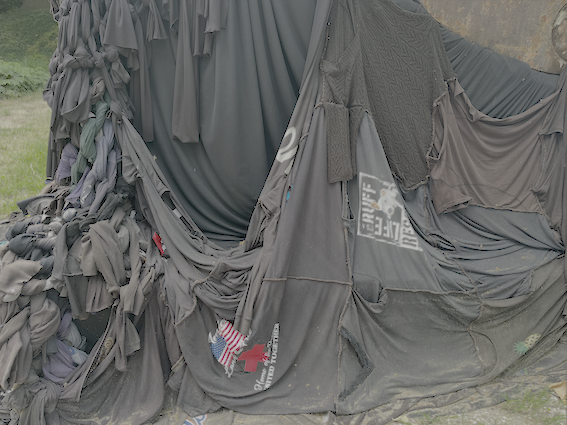
Wait a minute, this looks like it might be about the damage “charity” clothed have on local clothing makers and the environment in Africa – something I remember being told about when. I was in Nigeria. Get up, have a better look.
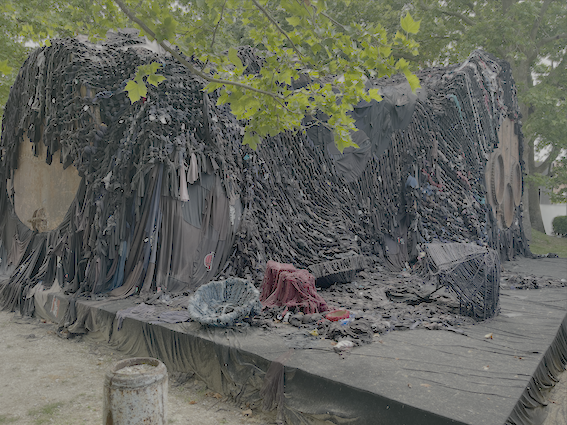
Walk around to look at sign.
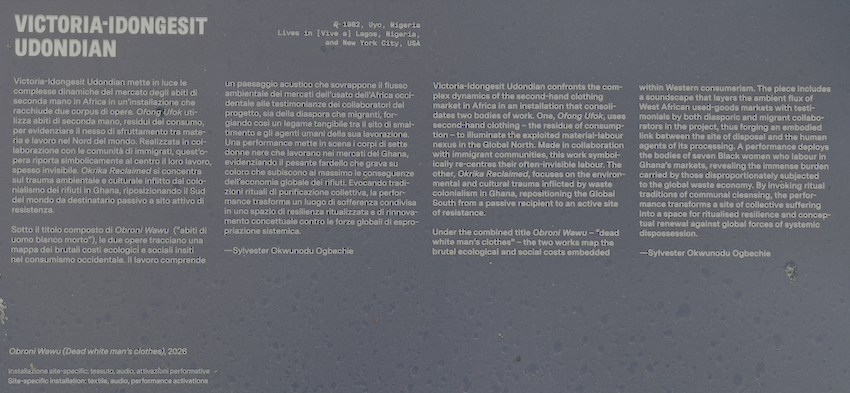
Yep. Dead White Man’s Clothes is Nigeria’s contribution to the Biennale. Would be good if this piece made a few people think.


